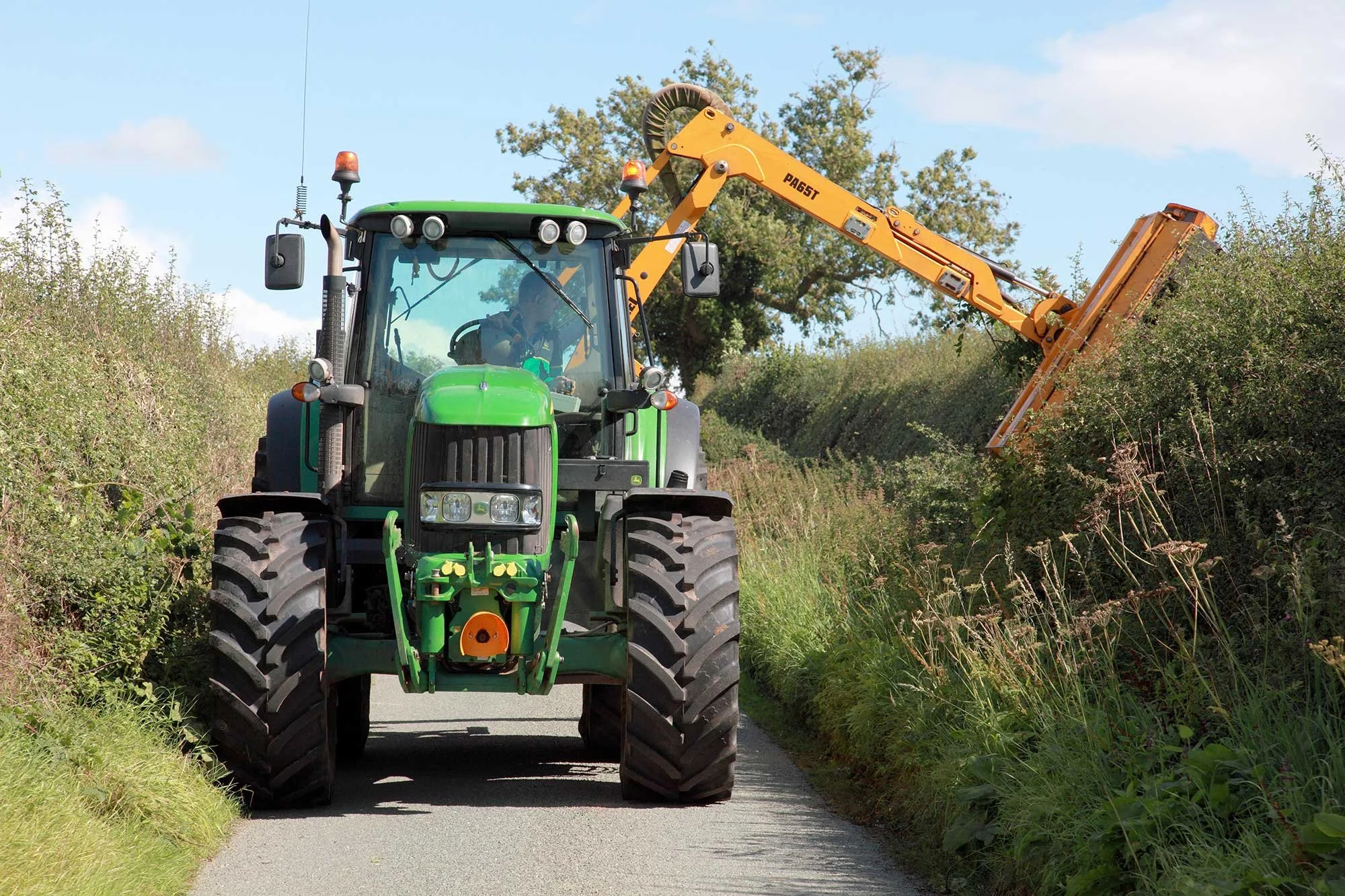
Trees across our landscape are a quintessential part of England’s green and pleasant land but caring for them must not be overlooked. Maintaining trees and hedges is essential for safety, aesthetics, and long-term plant health. However, responsible cutting is not just about appearance—it must also align with seasonal best practices and UK environmental legislation. At Kent Services, as arboriculture experts we are committed to delivering professional tree and hedge care while protecting wildlife and complying with the law.
Cutting at the Right Time
Tree and hedge cutting should always be planned with both plant health and environmental impact in mind. Poor timing can damage growth, spread disease, and disturb vital ecosystems. In the UK, the ideal periods for hedge maintenance are late winter (January–February) to encourage strong spring growth, and early autumn (September–October) to tidy up summer seasonal growth. These windows avoid the main wildlife breeding period and support healthier, denser hedges.
Similarly, tree pruning is typically best carried out during dormant months in late winter when trees are less susceptible to disease, the tree structure is easier to identify, and it causes less stress to the trees.
Ecology and environmental protection are a key part to the Kent Services ethos, and we endorse the strict environmental laws designed to protect wildlife habitats. Under the Wildlife and Countryside Act 1981, it is illegal to damage or destroy an active bird’s nest, and with the nesting season typically running from March to August cutting is only safe if there is certainty of no active nests being present.
There are other pressures involving the timing of pruning etc. During the winter bats may be using holes in trees as winter hibernation. Bats are subject to strict protection measures and if it is thought bats may be present in hollow branches a licenced bat ecologist will be needed to advise on the best procedure to avoid prosecution.
Hedgerows are also protected by Hedgerow Regulations, prohibiting any cutting of trimming between March 1 and August 31st. This is critical in protecting biodiversity and natural habits for birds, pollinators, and wildlife.
Getting it right
The team at Kent Services are here to advise our customers on how to best maintain their trees, hedges, and landscapes, and can advise on any aspect relating to these types of works, with our professional guidance ensuring all legal obligations are met.
Understanding the landscape is imperative, and at Kent Services we will survey your site for nesting birds in trees, hedges on the ground or in water. We will also survey ponds and ditches where applicable prior to conducting any work to monitor amphibious activity (frogs, newts & toads). These have different breeding patterns to birds but have to be taken into account.
Clearly, in the event of safety hazards or access issues, we can consult with the relevant authorities to gain permissions for tree felling, branch removal etc. outside of the permitted season. We can also advise on other considerations such as Tree Protection Orders (TPO's), Conservation Areas, root protection areas, as well as boundary issues.
Safe and Professional Service
Tree and hedge cutting is not simply a maintenance task—it’s a responsibility. By working within the correct seasons and respecting environmental protections, you can ensure healthier landscapes and a thriving natural habitat.
If you’re unsure about the right time or legal requirements, Kent Services is here to help—delivering safe, compliant, and environmentally conscious tree and hedge care all year round.
Contact Kent Services today to schedule a consultation or learn more about our professional tree and hedge maintenance solutions, wildlife management activities and water course attenuation programmes.